Archive for the ‘News’ Category

Oct31

Ecopsychology 2012

New Ecopsychology course in Sussex!

Applications are now being accepted.
The course will comprise of three taught weekends:
27/28/29th April,
23/24th June
15/16th September 2012. More below.


What is Ecopsychology?

Fundamentally, ecopsychology is about the reciprocal interdependence of human life and the rest of the natural world, sometimes referred to as the non-human or more-than-human world. However, ecopsychology can also been seen as a location for articulation of a number of hopes and fears about the state of the planet and the ecological crisis in which we currently find ourselves. Ecopsychology argues that this crisis is not just about consumerism, capitalism, ecological denigration, species extinction and over population, to name but a few concerns, it is a crisis of thought and feeling in relation to how we understand our place in the complex ecological web of interdependence that goes to make up our existence.


Ecopsychology is not just for psychologists, it is for all of those who feel driven to address these issues and see the importance of the links between mind, nature and society. It can be seen as a depth psychology as it is concerned not just with thought and behaviour, but much deeper spiritual and existential questions that call out to be addressed at this time in our history. Its premise is that we need to understand our egocentric way of being in order to move forward to a much more holistic and interdependent ecocentric way of being. In so doing understanding that we must hold the planet and all who live in it with care, compassion, respect and love.


Ecopsychology course outline

The course is based on a co-operative inquiry model and as such aims to become a relational and participative on-going spiritual practice for those who attend. Through a holistic experiential learning approach including individual learning contracts, the use of peer groups and peer and self assessment, the course aims to honour individual differences, encourage student-led learning, facilitate transformative experiences and build a lasting community of inquiry, support and practice.

The course consists of three weekends of attendance with the first being held on a residential basis in order to facilitate a culture of trust in the formation of the group.


Who is it for?

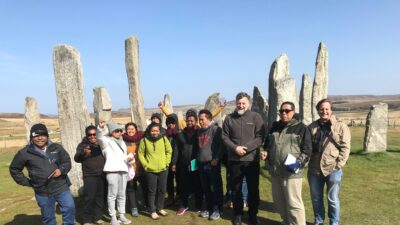
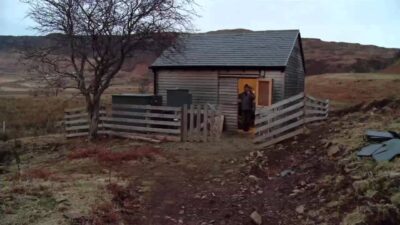
Ecopsy knoydart circle

This course is aimed at anyone who questions the wisdom of modern day customs and culture, who seeks to explore the relationship between the human and more than human worlds or who yearns for a holistic engagement in questioning what it is to be both human and humane. It is designed to facilitate a personal transformation from an ego-centric towards an eco-centric self and to allow for engagement to take place through experience, creativity, critical thinking and practical application.


Course dates and venues

The course will be held over three weekends spanning six months in venues that are held in stunning natural surroundings. The weekends are spaced to allow ample time in between for personal exploration and peer group inquiries which are rooted in the place where everyday life is lived rather than in some remote location inaccessible to daily living.

April 28/29th 2012 - The first weekend will be a residential camping adventure in order to give the group time and space for getting to know one another and fostering a feeling of trust and group cohesion. The venue is set in the ancient splendour of Powder Mill Wood near Battle in East Sussex and includes indoor spaces in a green roofed roundhouse and a spacious and peaceful yurt and outdoor spaces around a large fire pit or in a secluded labyrinth. Participants will be required to provide their own tents and equipment though some will be available to borrow with lengthy advanced notice. (click images to enlarge)

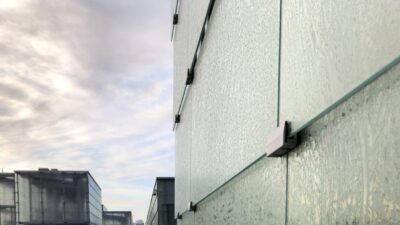
23/24th June and 15/16th September 2012- The second and third weekends will be held between the hours of 10am and 6pm in the award winning eco-building, Earthship Brighton which is set in the 200 hectares of Stanmer Park and surrounded by 17 acres of organic farm land and the South Downs National Park. These are non residential weekends and participants will be expected to find their own accomodation if required. Further details on directions and provisions will be provided upon registration for the course.

Cost

The cost for the course is £600 including workshops and fees. Food is included on the first residential weekend as we will be living and cooking together. The subsequent weekends will work on a bring food to share for lunch basis but will include tea/ coffee and biscuits for breaks. Terms and methods of payment will be made available upon registration for the course.


Application Process


In order to register for the course, a short application will need to be made. We would like you to write a personal statement (no more than 1000 words) that addresses these questions:


* Why are you interested in ecopsychology?
* How might you apply what you learn about ecopsychology on this course to your everyday life?
* What life experience do you feel you bring to this course?

Please send your application and/or any questions to info@che.ac.uk

Applications will be accepted on a first come first served basis and there will be a minimum number of participants for the course to be run. The maximum number of participants is 12.

Professional Development

This is a professional development course delivered by the Centre for Human Ecology which has been providing post graduate education in subjects concerned with the relationship between human beings and the natural environment for the past 40 years. If you are an accredited psychotherapist or other professional in need of Continuing Professional Development hours, this course counts for up to 40 hours of CPD.


Facilitators

The course will be facilitated by Jane Glenzinska and Martin Jordan. For more information click here.


Sep30

CHE graduate and fellow launches WWF Natural Change report

Dave Key, CHE graduate and fellow has co-authored the WWF’s new Natural Change project report, available today both for download and print. From the reports’ executive summary:


This report offers fresh insights into leadership, education, communications and policy for
sustainability: for example, in meeting the aims of the Climate Change (Scotland) Act 2009
and supporting The Low Carbon Scotland: Public Engagement Strategy (Scottish
Government, 2010); and in implementing Curriculum for Excellence and the recommendations
made in Teaching Scotland’s Future (Scottish Government, 2011).


The report is available to download here: http://assets.wwf.org.uk/downloads/wwf_naturalchange2.pdf

More information is available on the Natural Change website: http://www.naturalchange.org.uk/

Sep27

Adam Weymouth: Man Vs Machine

photo from http://ratcliffeontrial.org/

In 2009, CHE graduate and environmental activist ADAM WEYMOUTH was among those arrested for
planning to disable a power station. Finally acquitted this summer after a chaotic two-
year trial involving climate scientists and an undercover cop, he ponders the lessons
learned. This article was originally published in the October edition of Third Way magazine

On Easter Sunday 2009, I joined more than a hundred people gathering in Nottingham to hear of a plan to shut down E.ON’s Ratcliffe-on-Soar coal-fired power station – the second biggest in the UK – and to keep it closed for a week. One team was to stop the coal conveyors which fed the boilers, whilst another would climb up the inside of the chimney before abseiling into the flues, preventing the plant from re-opening. It had been rigorously planned, and safety was paramount. There was no question of homes loosing power, as the National Grid would take up the slack. If successful, we would keep 150,000 tonnes of CO2 out of the atmosphere, the equivalent of the 33 least polluting countries combined.

Standing outside our meeting place the night before we were due to launch the plan, I watched the lights of a helicopter high above us. Someone joked that it was probably the police. A few minutes later, hundreds of officers were surrounding the building. We offered to let them in, but instead they smashed the doors down. Over the next few hours 114 of us were searched, hand-cuffed, and driven away to fill up the cells of Nottinghamshire. It was one of the biggest pre-emptive policing operations ever undertaken in Britain. And, as we were to find out later, it had been planned for months.

During the year-and-a-half of police interviews and legal bureaucracy that followed most had their charges dropped until just 26 of us remained, charged with conspiracy to commit aggravated trespass. It was the first time such a charge had ever come to court. Twenty of us stood trial in November 2010. We admitted our role in the conspiracy, yet pled not guilty, defending ourselves on grounds of necessity. As an example, even if you didn’t have a driving licence you would be justified in jumping in a car that was rolling down a hill to stop it. We argued that stopping the emissions from Ratcliffe was both necessary and reasonable, in light of the impending chaos of climate change, and the complete inaction of government to do anything meaningful about it.

James Hansen, one of the world’s foremost climate scientists and Director of NASA’s Goddard Institute of Space Studies, took the stand to detail how we are approaching certain climatic tipping points that will lead us down a path of irreversible climate change, and described the pivotal and catastrophic role that coal is playing in this. ‘It doesn’t surprise me,’ he said ‘that young people are angry when they know that politicians are lying to them.’ Caroline Lucas, leader of the Green Party and Britain’s first Green MP, spoke of how the government is failing to tackle the issues with anything close to the sort of vision and conviction that are vital. We described how we had arrived at a point where we saw that these two conflicting worlds as entirely incompatible, and saw no other option than stopping carbon emissions at source. When the judge came to sum up, we felt we’d done all that we could to make a very clear and persuasive case.

MACHINATIONS OF STATE
MAN-VS-MACHINE1.jpgA political trial brings together all the elements of the story into one scene for the final act. Rather than an abstract state pushing pawns with invisible hands, the whole machinations of that state were laid before us. The judge, the police, the prosecution, the chief executives. Rather than the figures and statistics we read in the newspapers, there were the scientists describing the disintegration of our spluttering planet. And rather than abstract public opinion, there sat a jury, a cross-section of the community, to give their verdict on us and on our methods.

Rarely have I experienced the lumbering juggernaut of the state so acutely, and how the scales seem tipped on the side of those who uphold the system. I listened as Raymond Smith, the former plant manager, spoke of how they chose to burn coal, the dirtiest, highest emitting fuel there is, because it provides the greatest profit. I listened as Dr Ian Roberts,  Professor of Epidemiology at the London School of Hygiene and Medicine, told the court that we risk a ‘generational genocide’ as we ‘sleep walk into a nightmare’, and that 150,000 people a year are dying already as a result of man-made climate change. It had been a long time since I had heard so bluntly things that I knew but often chose to hide from. Yet there was no space in that courtroom for my frustration and despair. I watched as the machine eased to its apparently inevitable conclusions, as the inequalities and looming tragedies became statistics and fell under the typist’s fingers and echoed about the walls and into nothing.

Yet there is a glaring chink in this armour. It is the jury. It is the public. It is the way that people think. At the end of three-and-a-half weeks, it was twelve ordinary people who were given a free choice to find us guilty or not, based on the evidence they had heard. People are not just the potential spanner in the works. People own the machine, and every morning they make a decision not to switch it off. And what happened? After three days of deliberation, the jury returned a unanimous verdict. Guilty as charged.

UNDERCOVER COP
Around that time the news broke about the police officer Mark Kennedy, exposed by the people he had lived amongst for seven years. The media seized on the story. Living undercover as Mark Stone in Nottingham, he had been posing as an environmental activist, travelling to protests all over Europe. He was also one of the 114 arrested back in 2009, and had been involved in the plans from the beginning. So that was one mystery cleared up.

Days before the second trial was due to start, the lawyers for the remaining six defendants, who were defending themselves on the basis that they had not yet made a decision to take part in the protest, submitted another claim to the prosecution for disclosure of all evidence that related to the case. What they were looking for was any sort of report that Kennedy might have made that could have lent weight to their testimonies. Lo and behold, before the end of the next day the prosecution came back and said that ‘new evidence had come to light’, and they would therefore be withdrawing from the trial.

That new evidence turned out to be a series of tapes covertly recorded by Kennedy while we were being briefed on the eve of the direct action, and withheld by the prosecution. As the Lord Chief Justice said months later, this undermined the ‘elementary principles which underpin the fairness of our trial procedures’. These tapes would have shown that those who claimed that they were undecided about taking part in the action at the time of arrest were indeed telling the truth. They would also have shown that we believed what we had maintained throughout our trial -  that our planned action was crucial in order to save lives. Felicity Gerry QC of the CPS had claimed throughout that it was just a publicity stunt that was more fun than voting, and we had only planned to shut down a power station because we had been unable to get tickets for Glastonbury.

A review was ordered, and in April the Director of Public Prosecutions took the unusual step of inviting us to appeal. And so it was that we walked into the Court of Appeal on July 18, 827 days after our arrest, to hear the Lord Chief Justice’s ruling. ‘It is a case,’ he said, ‘which has given rise to a great deal of public disquiet, which we share’. Something had gone ‘seriously wrong’ with the trial, and the prosecution had failed to disclose evidence which would have ‘seriously undermined’ their case. ‘As a result justice miscarried.’ After just an hour, we walked out with our convictions quashed.

UNANSWERED QUESTIONS
It is nice to be vindicated. Yet many questions do still remain unanswered, and despite multiple inquiries (seven by some counts, eight by others) it seems unlikely that we will get answers any time soon. Who was it that made the decision not to disclose the evidence? Why were only 26 charged, or why were 87 wrongfully arrested? How many undercover officers are out there, also trying to prevent peaceful, proportional action? Why was the plan not nipped in the bud back when the police first knew about it – why, instead, a decision to arrest as many people as possible just before it happened, and then tie them up for two years in the courts? It is difficult to see how such tactics help facilitate protest, which, as we are often told in political soundbites, is a healthy part of a functioning democracy.

The media fascination with Mark Kennedy has shifted emphasis off of those higher up the shadowy chain of command, away from those who might be able to answer these questions. With representation by Max Clifford, an upcoming documentary and rumours of a feature film, it doesn’t look like that fascination is going to go away any time soon. If the inquiries do eventually decide that something has gone wrong, we will most likely be told that Kennedy was just one rogue in a perfectly good system, and if we could just root out the rogues then we’d all be back to normal. But is that really the case? Our appeal came on the same day as the parliamentary committee for News International, and so singing a song of corruption was hardly something new. But the timing made it hard not to feel, as the allegations gathered around Westminster, that rather than a few rogues in an otherwise healthy system, the corruption went right to the heart of the system itself.

COMPETING NARRATIVES
Yet despite all this, the jury did find us guilty. Lacking Kennedy’s crucial evidence, their decision became a choice between two competing narratives. Our earnest stance of saving lives and the failings of democracy, versus the prosecution’s insistence that we’d have been happier at Glastonbury, and that we had made no previous efforts to convey our message, despite our proof to the contrary. We should not ignore that they chose the latter. Whilst tempting to write their decision off as a jury that just didn’t ‘get it’, or as a state which had weighted everything against us, it isn’t always useful to carry on playing the role of the misunderstood underdog. It may be useful to look a little deeper.
I feel guilty. Not about planning to shut down a power station, because I have never wavered in my conviction that putting our bodies in the way of emissions is proportional and right. But guilty of other things, things that I believe may well have contributed to the jury’s unanimous verdict. Guilty of not adequately communicating our reasons for what we chose to do (and real communication concerns itself with what is heard, not just what is said). Guilty of assuming that if we told people enough facts then they would absorb our vision of the world. Guilty of thinking we could turn up in an ex-mining community and not engage with peoples’ immediate and local problems. Guilty of thinking we had the right to speak for people without first asking them if we had this right, when we come from a demographic that you could fit on a pinhead. Those are things that do not go away when the convictions are overturned.

In trying to force our own vision upon the world without taking the time to listen and understand, are we further entrenching the stories which we were originally hoping to challenge? Indeed, people do not respond well to having changes forced upon them, having new ways of life shoved down their throats, and we can be thankful for that. Working with blind urgency will never build community and it will not build solidarity, and it is these that will truly challenge the current status quo. We are so very prone to unconsciously repeating the same myths we have grown up with. Stories that sustain the ‘us and them’ dynamic that closes down a deeper, holistic conception of the world.

Stories that stress that the world is shaped by individuals, and those individuals are the ones with the loudest and boldest voices. Stories that fail to address privilege. Stories that fetishise progress as the direction of humanity, that claim we are on an upwards path to a final destination, some secular version of heaven. But these stories can change, if we begin to be aware of our taking part in them. It is us who must become the storytellers.

True storytellers neither tell you the story that you want to hear, nor a story that will shape the world into their vision of it. They speak a story from a true place, and they trust the rest to the wings they give their story, and to their listener. There is a gulf between storytelling and advertising, and this is it: we must discern whether the stories that we carry, and that we live by, are true ones, for if not they will not find their mark. To discern comes from cernere, to separate – it is to sort the truth from the rest, within ourselves. This is the very basis of spiritual activism. Stories that are not true will manifest accordingly, for it is truth that is the essence of life itself.

BETTER PARABLES
When we were arrested we were building up to what was being touted as the most important meeting in human history, the 15th UN Conference under the Climate Change Convention, in Copenhagen. It came and went. As we sat through the trial the 16th Conference, in Cancun, came and went also. Now we are in 2011 and climate change has all but vanished from both the political and social agenda. Yes, this is understandable, due to the pressing urgency of other questions, and the immediacy of people’s concerns. And no, this is not understandable, because it has not gone away.

Areas of clear cut forest stare back unblinking and the islands are blurring at the edges. The world is thirsty and the wounds are fly-blown and we have reached a point that even if it heals there will still be a legacy of scars. Yet still we tend to fall back on our familiar stories in times of need. I believe the jury’s reaction to us emphasises that.

Clearly, what we have failed to do is to draw the links and tell the tales that show that environmental justice is an issue for every person on this planet, and that the same system that perpetuates ever increasing emissions also perpetuates poverty and oppression. The riots in London have made apparent the fear and anger that people feel when authority is being challenged, but not in their name. Any action needs, first and foremost, to unite and empower communities, by supporting, inspiring, and making these links explicit. If we do not, we may rightly be judged guilty.

Christianity has long understood the power of parable, and how it can open spaces that allow a deeper morality and spirituality to flourish in ways which simple instruction cannot. Perhaps, again, that is where we should be looking, for the stories that have borne truth across millennia within their words.

Perhaps the Church has a role to play in exposing the illusory, unsubstantial nature of the myths we now believe. For these modern stories can change. The cliffhangers are starting to seem more like bad endings. Education, unemployment, debt, health, the environment – the future is being pulled from beneath our feet. We will live with these problems, and our children will live with these problems. People are realising this, and they are choosing not to back down. The fight against climate change can be a part of this changing story. We can tell it as one symptom of a system of oppression that has turned its back upon the marginalised. We can join others, not just invite them to join us. Supporting the struggles of others is also direct action. Or we can try and tackle climate change in a way that plays into and shores up the pervading narrative, and continues to exclude those that are already excluded by the very system we claim to fight.

This is our choice, and it is not an incidental choice. It is one that lies at the very heart of who we are, and who we will become.

Sep06

CHE Fellow Alastair McIntosh featured on BBC Radio Scotland

Fellow Alastair McIntosh was recently featured on the BBC Radio Scotland programme ‘Dirty Filthy Money’, discussing how our values about savings and debts have shifted, and if the ethics of how we interact with money could be transformed.

Listen online to the programme at the link below:

http://www.bbc.co.uk/iplayer/episode/b00y8t3t/Dirty_Filthy_Money_Episode_3/